Posts in "Photos"

Making a huge 1920s cabinet small

We acquired a massive cabinet from a friend when we lived in Germany. It was circa 1920s and is what I’d call “proto-IKEA,” in that it was designed to be disassembled, presumably because it was so huge and heavy. We grew attached to it over the years, but the problem we faced is that it didn’t fit in our new small home. So this project entailed converting the full size monster into something much smaller by removing the center section and building a new base and top. I had three goals for the build: (1) make a new cabinet using the sides and doors of the old cabinet that could also be easily disassembled; (2) make the new cabinet stronger; (3) only use hand tools. The main challenge: nothing was square in the old cabinet. Each door was a different width, the sides were not square, and the existing wood was warped.

Here’s what the full-sized cabinet looked like in our previous home. It was about seven feet wide.
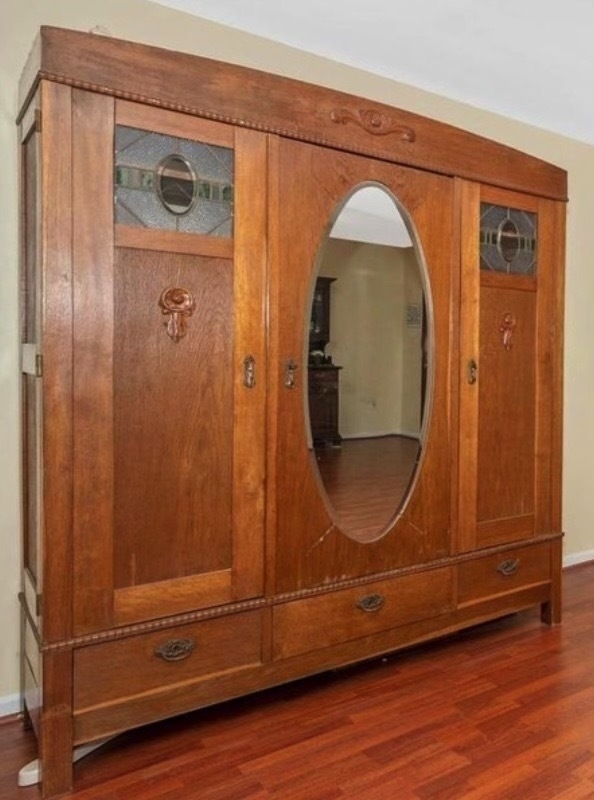
The full-sized cabinet was about seven feet wide

Here’s the completed “mini cabinet” in our new home:
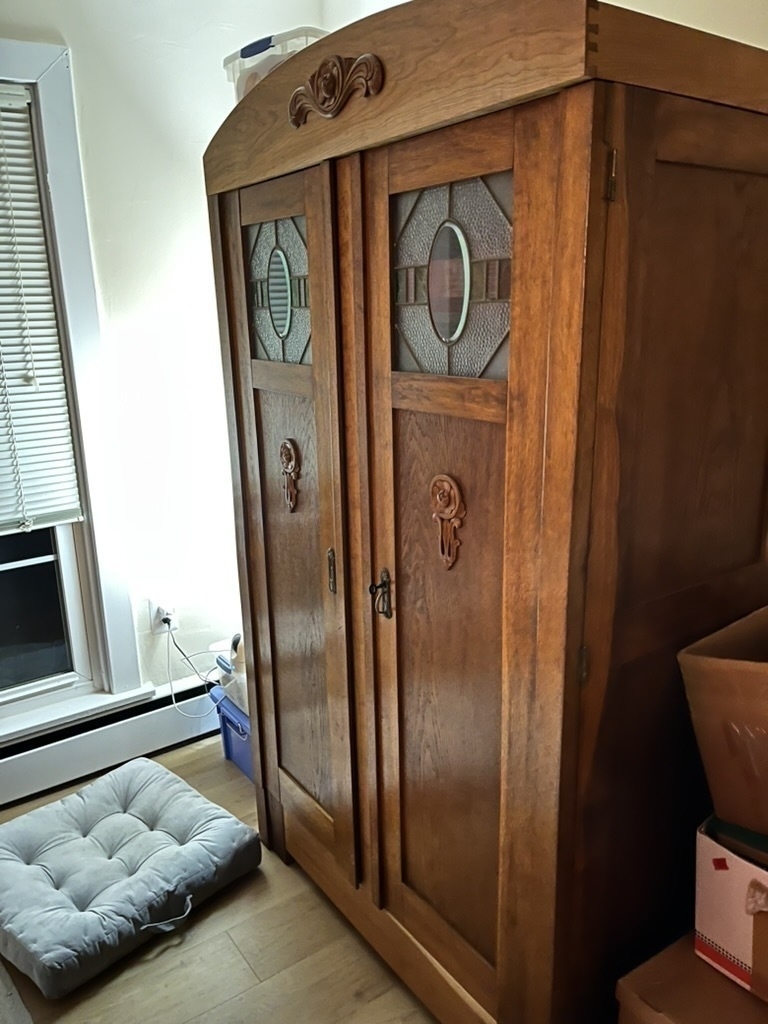
The completed cabinet conversion is about four feet wide

Here’s a brief-ish overview of the process.

I made the four legs out of some sapele I had on hand. I cut each leg in an L shape to match up with the doors to give it a more seamless look. Then used mortise and tenons to build the frame with cherry.
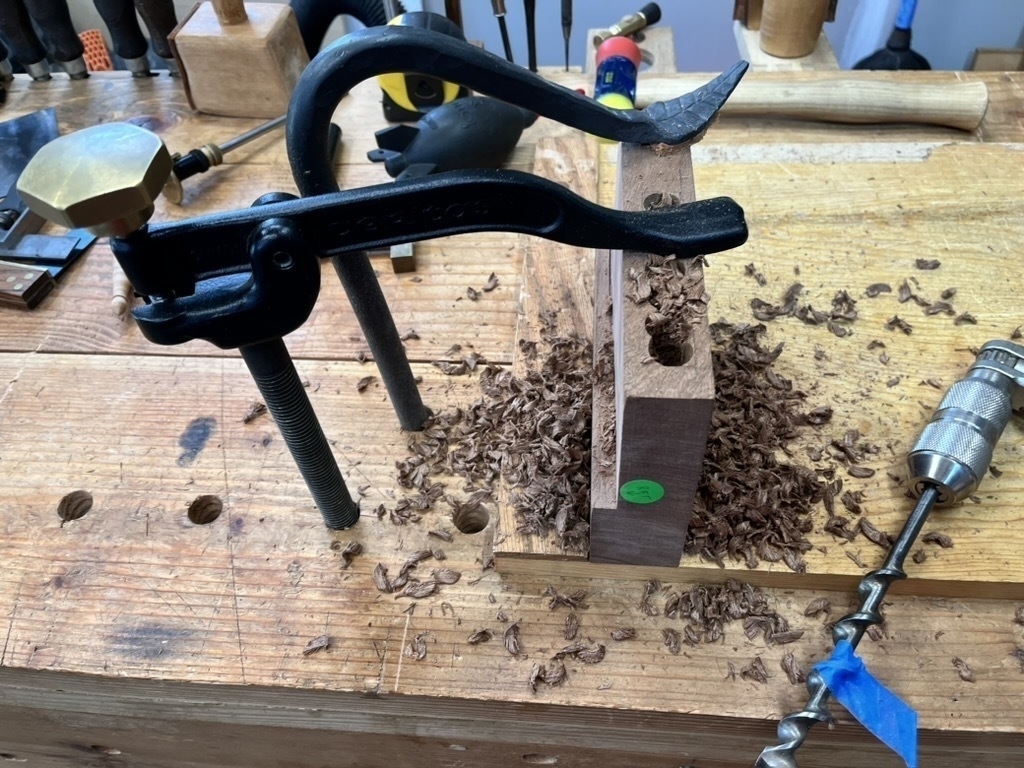
showing cutting holes in one leg piece to create a mortise

Here’s the base support, dry fit. I used cherry for the show faces of the project.
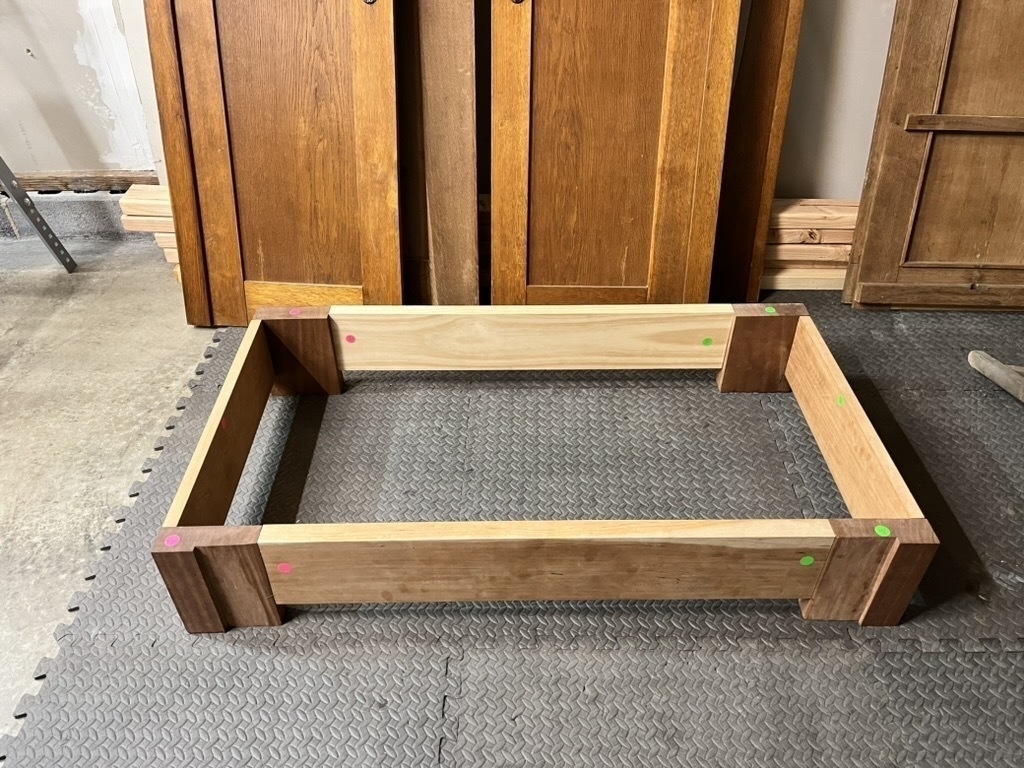
the base frame of the new cabinet

For the floor of the cabinet, I used poplar. On each end that would be supporting one of the cabinet walls, I decided to use dovetailed boards for added stability to keep it all together nicely.
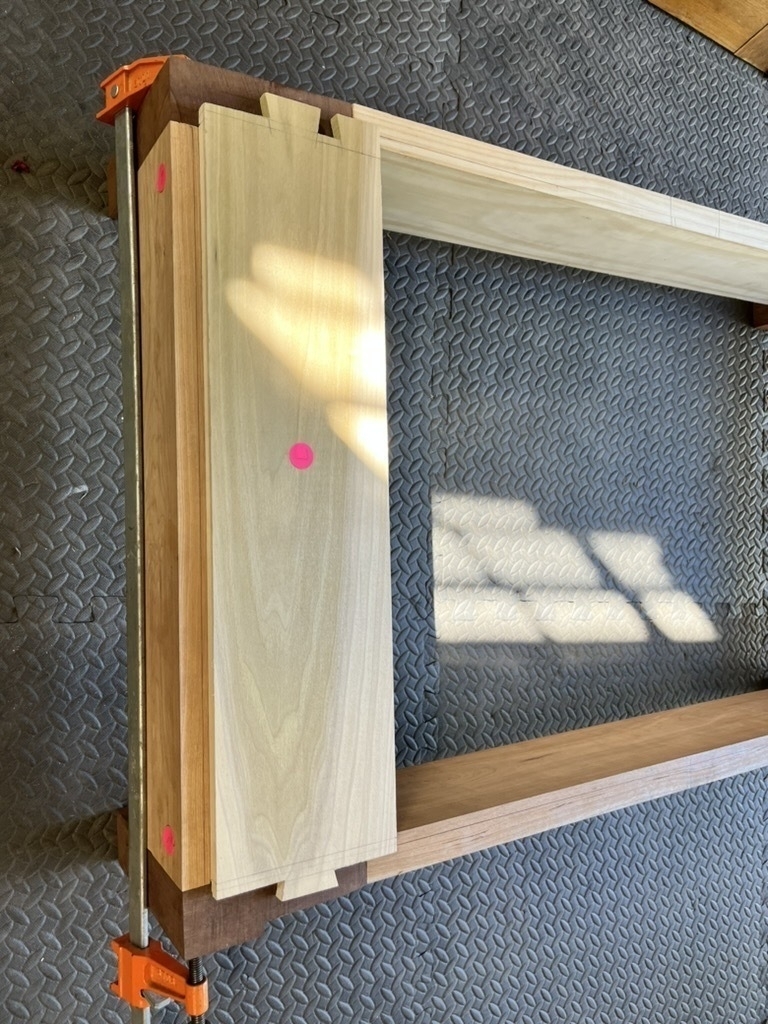
dovetailed poplar atop the base frame

For the legs, I used chisels and a saw to slowly shape them out to fit the dovetailed poplar.
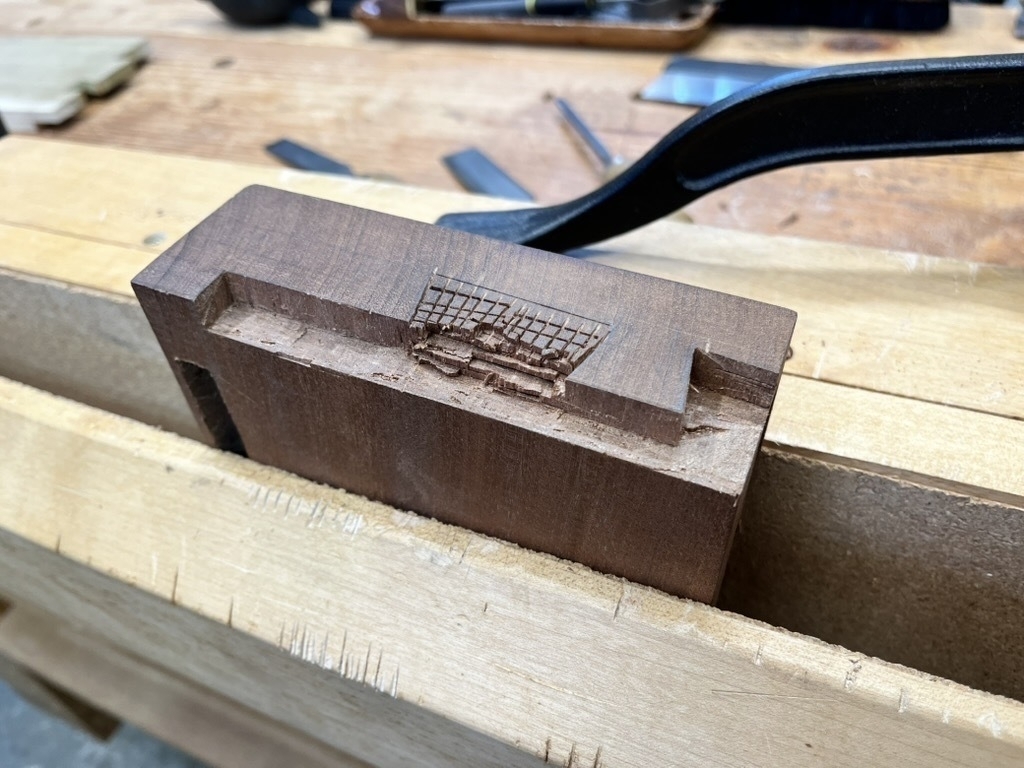
carving out the dovetails in the legs

Here’s the completed right side of the base.
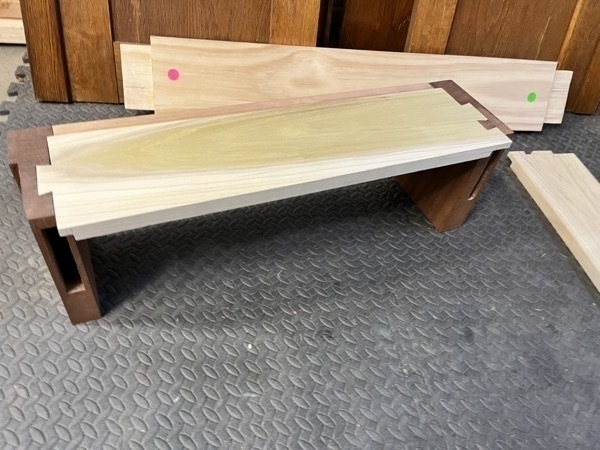
one completed base frame edge showing the dovetailed legs and floor

It ended up having quite complex joinery, but it all worked out. These end pieces of the base frame will support each cabinet side.
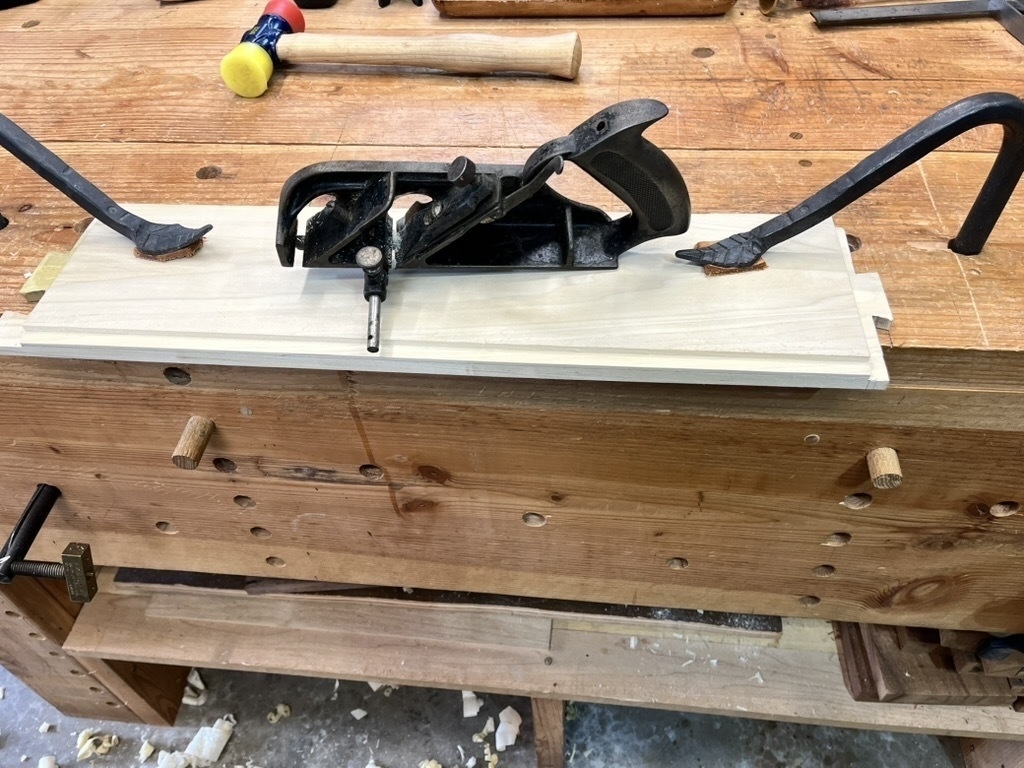
the underside of the dovetailed and grooved poplar showing the complex joinery

Here’s the base dry fit, each poplar board is shiplapped.
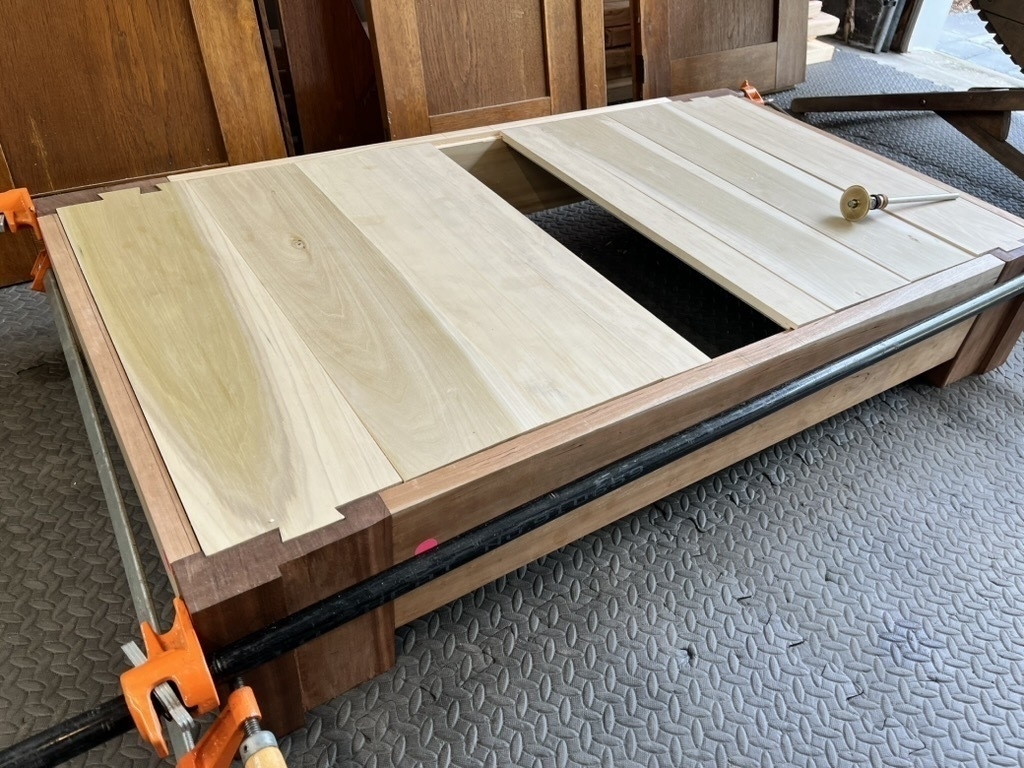
the cabinet base dry fit together

The trickiest part of the project was figuring out how to support each wall. The original cabinet has only a single center pin on each side holding the side in place, but these pins were just slotted in and didn’t offer any support. It was basically held together just by the weight of the top. Each side also slots into the base and top with a what is basically a long mortise and tenon. So I had to come up with a plan for the base and top to fit these long “tenons” and also to strengthen how each side attached to the base.
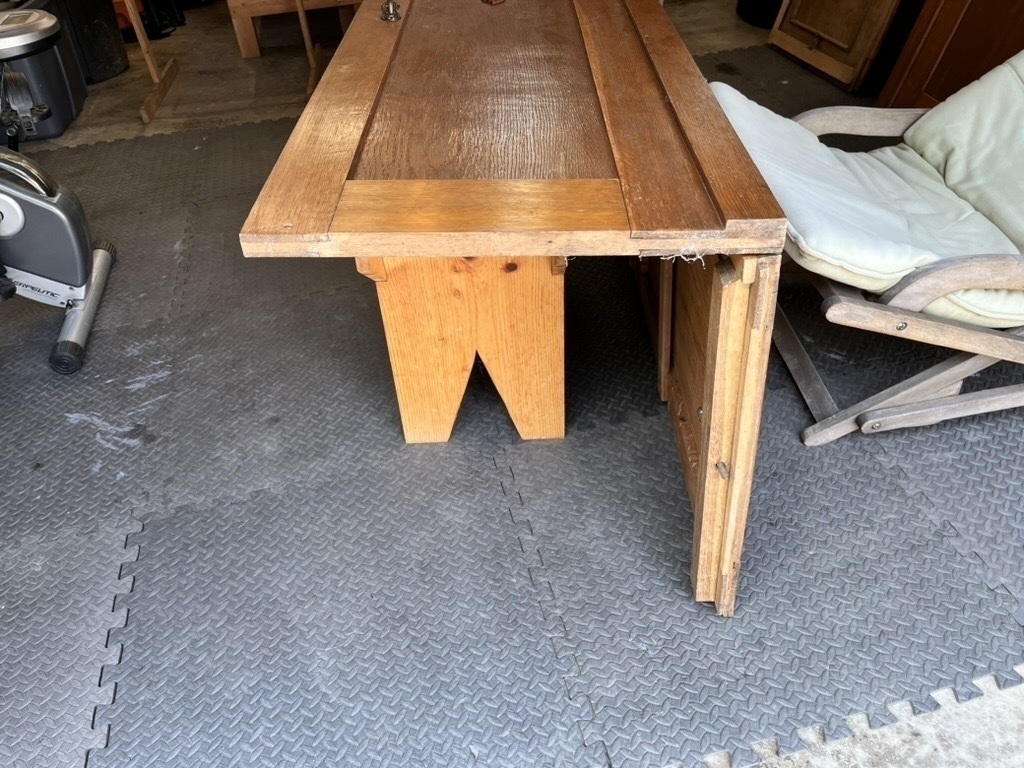
Cabinet side showing the pin and tenon

That’s what the following shot shows. The center hole fits the pre-existing pin. Then I added two new holes on each side and inserted a thread in each so I could bolt it in place with a hex wrench. Each side piece also slots into the base.
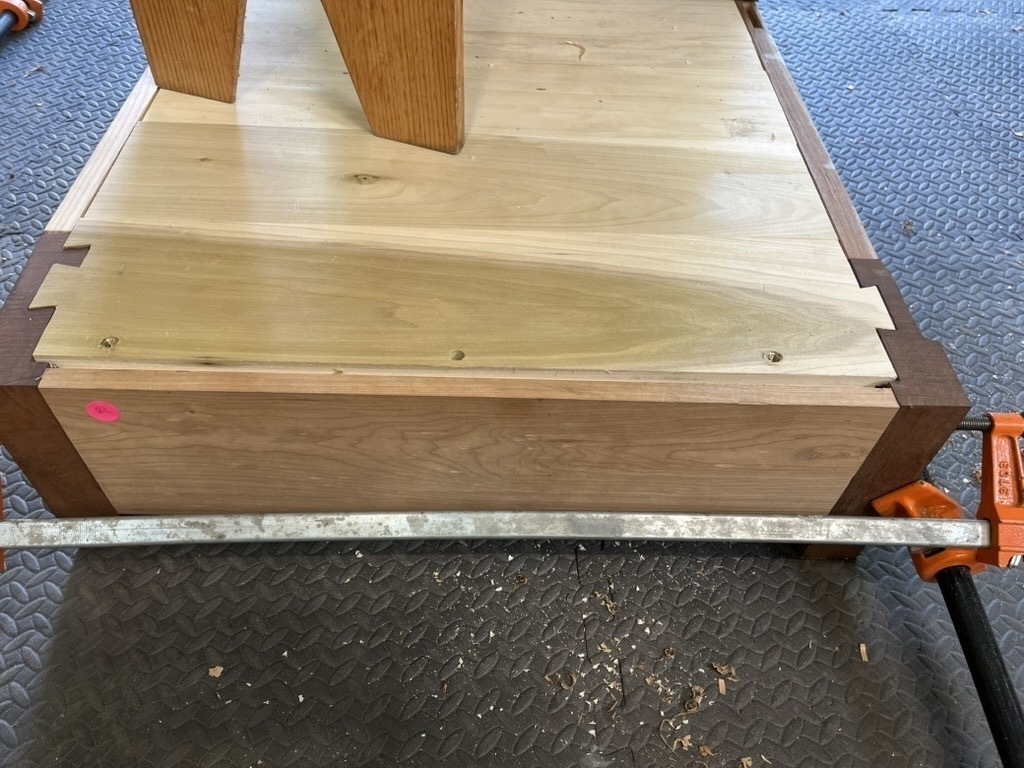
The base, showing the threaded holes to bolt on the sides

The top was a much simpler affair. I first cut and shaped the top front.
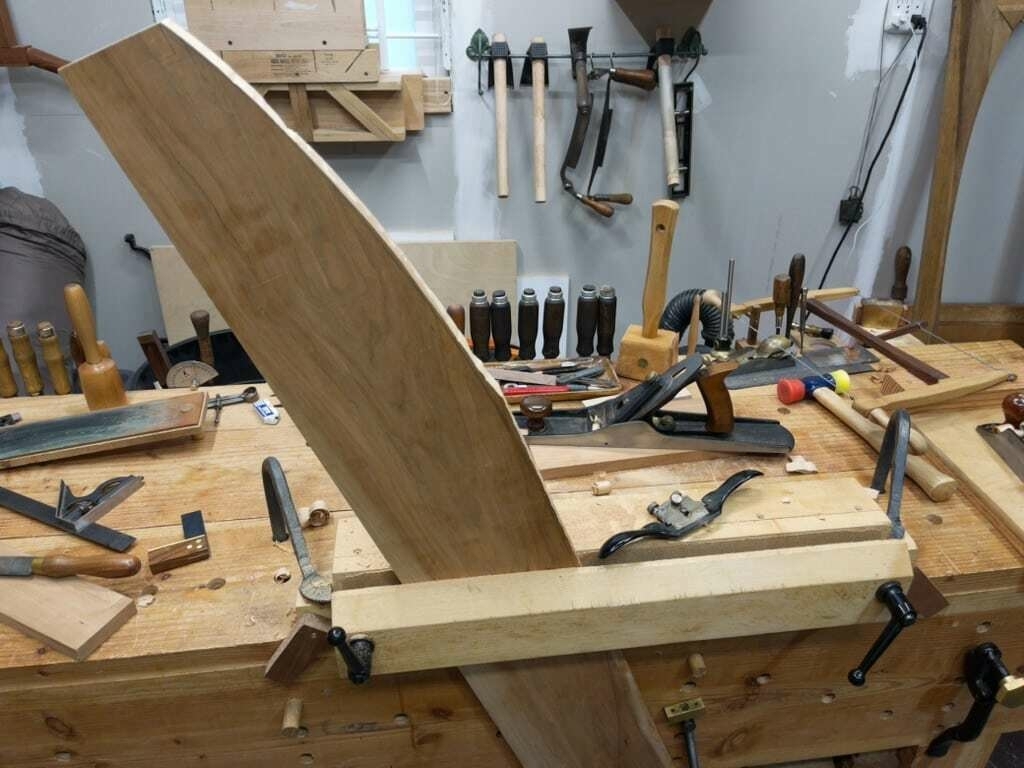
cutting and shaping the top show front

I went with dovetails for the top frame to keep it all together nicely. I closed up the top with a 1/2 inch plywood insert that is removable so if we need to take it apart again it’ll be easy to move.
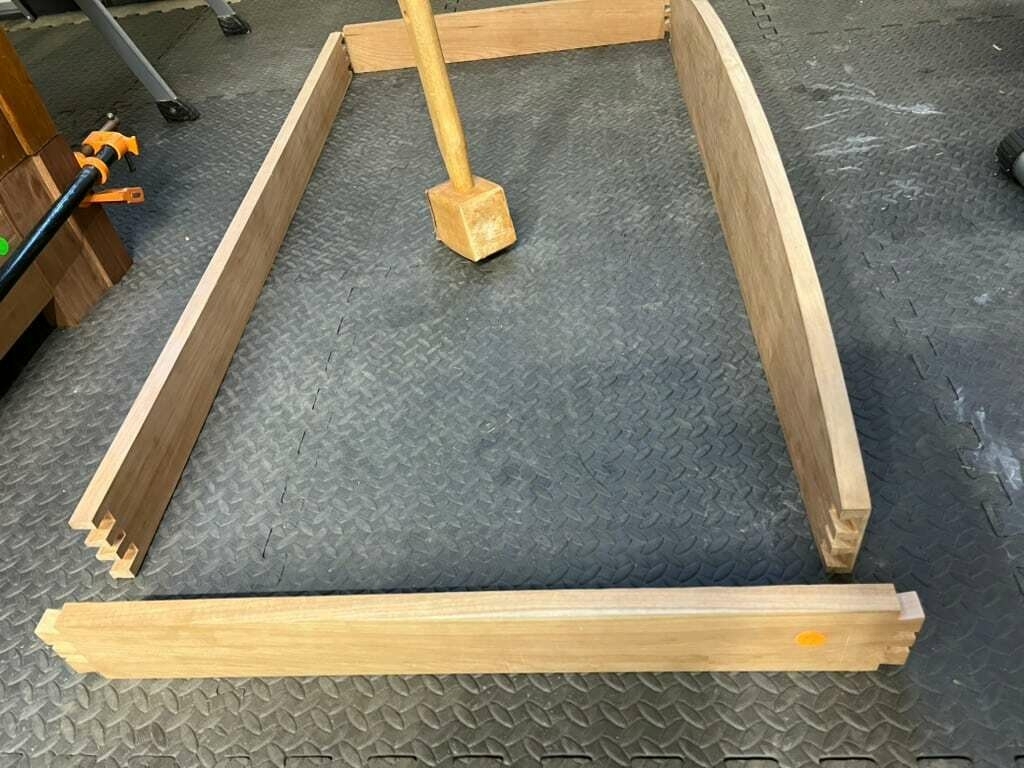
the top frame showing dovetails

This is the completed cabinet showing the interior. The back is 1/2 plywood. The shelf was re-used from the old cabinet and just had to be cut to size. The nice thing about the design is that base, top, sides, doors, and back are all removable, so it can be knocked down if needed to transport easily. I took the rosette from the old cabinet and placed in on the new top (it was just a nailed-on affair, this was not a high-end cabinet). I’m happy with how it turned out.
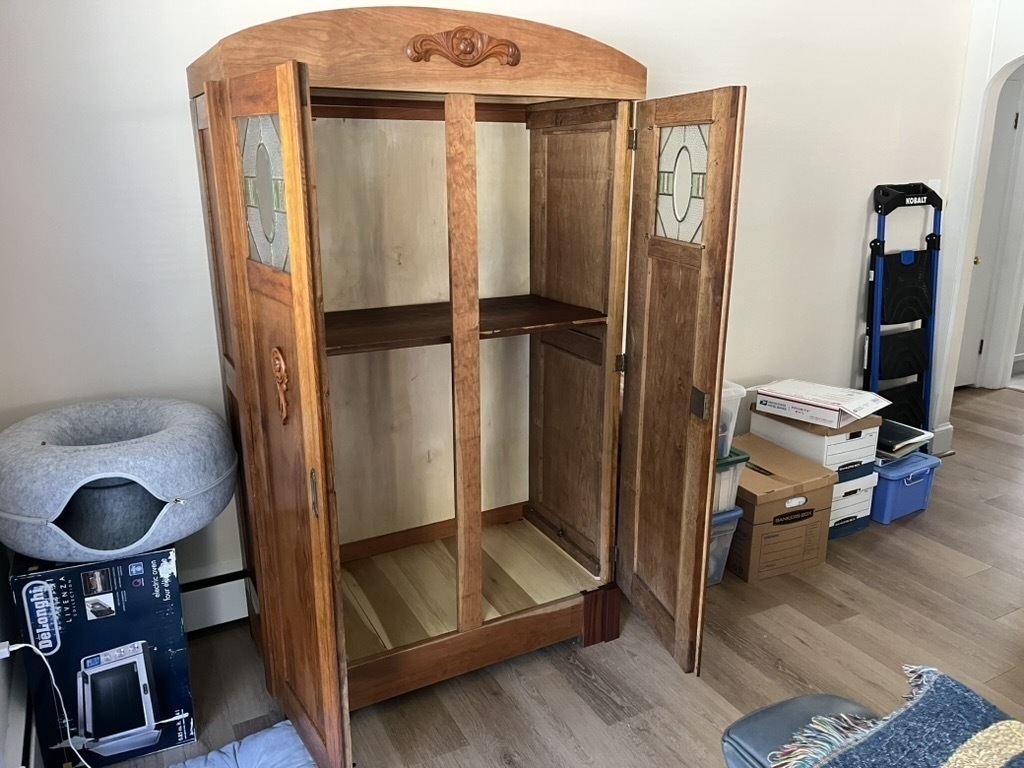
completed cabinet showing interior

On a very cold December morning, I’m thinking about Savage River, Western Maryland, in September.

Savage River in Western Maryland

Western Maryland, last week. Been meaning to post this because it was an amazingly beautiful morning that this image barely captures. I took this on my way to do some fly fishing on Savage River.

Western Maryland, last week. Been meaning to post this because it was an amazingly beautiful morning that this image barely captures. I took this on my way to some fly fishing on Savage River.

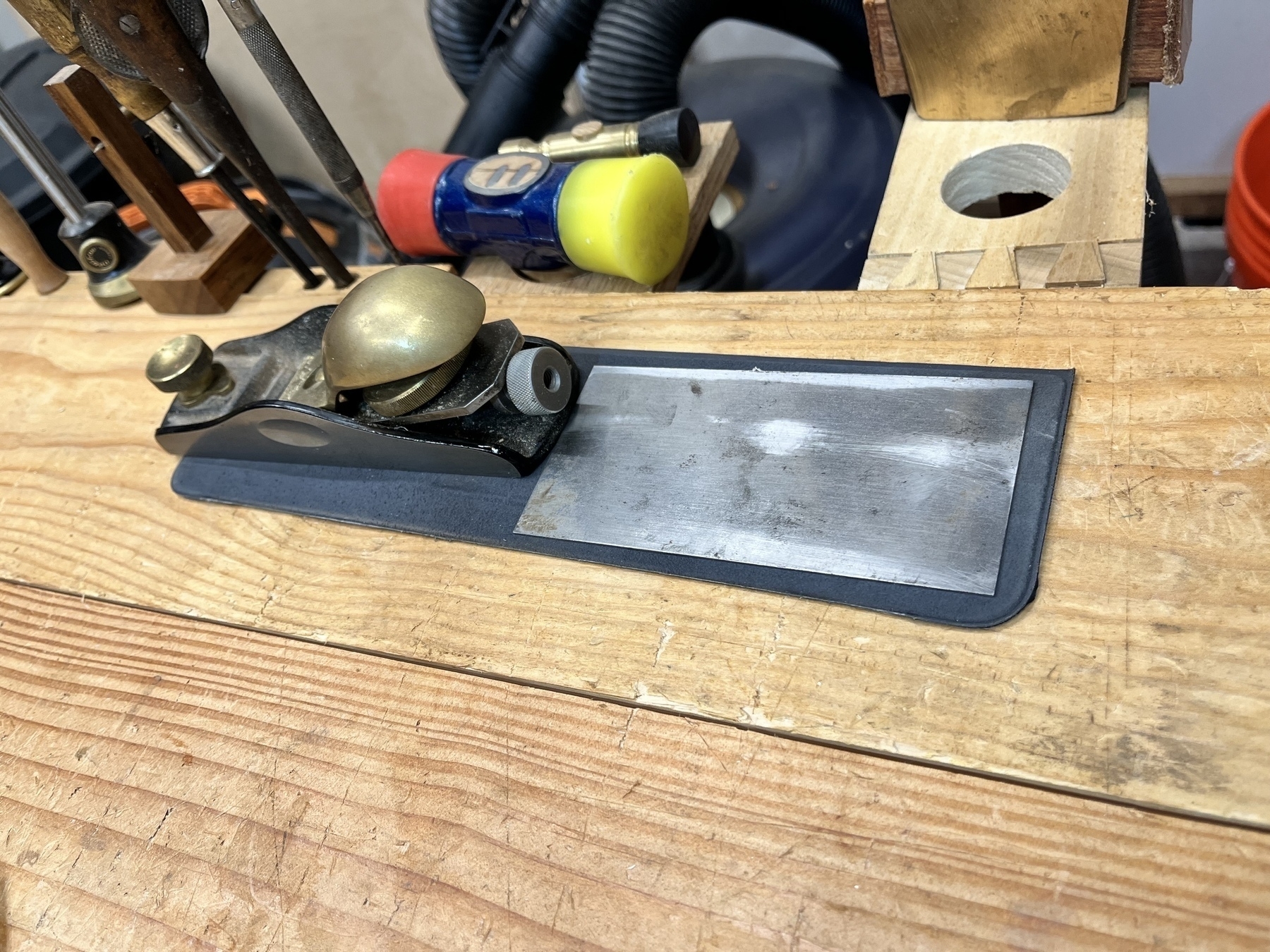
If you have an old iPad Smart Folio keyboard you no longer need or use, here’s a use for part of it: cut off the magnetic section in the back and use it on your workbench to hold some things. I use mine to hold a card scraper and block plane. It’s a nice holding surface because it’s magnetic and it has a plush top.

Block plane and card scraper on workbench, held on magnetic bit of old iPad Folio keyboard case cut out.

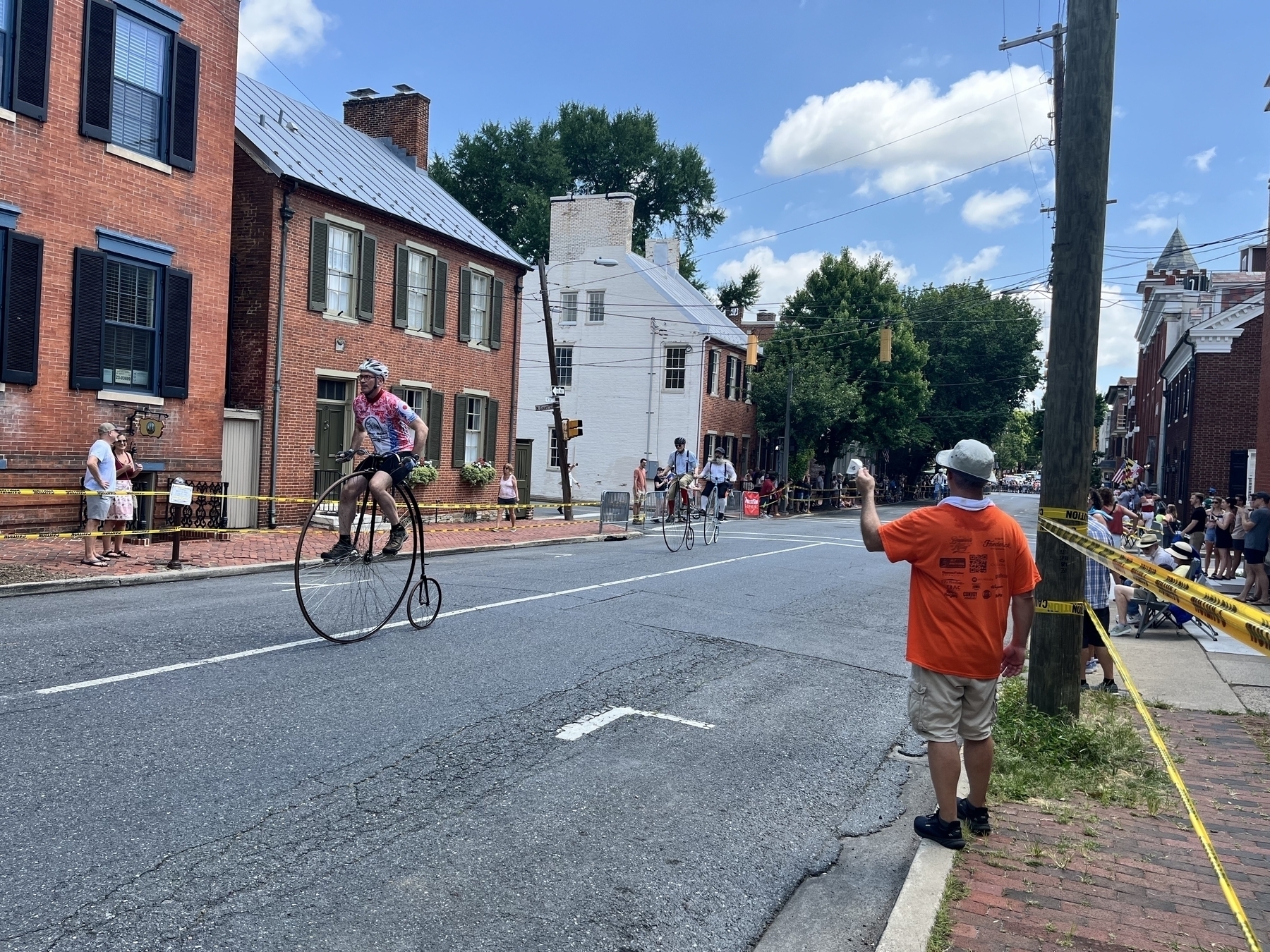
Annual high wheel race in Frederick, Maryland, is underway.

A group of people on vintage penny-farthing bicycles ride down a residential street while spectators watch from the sidewalks.

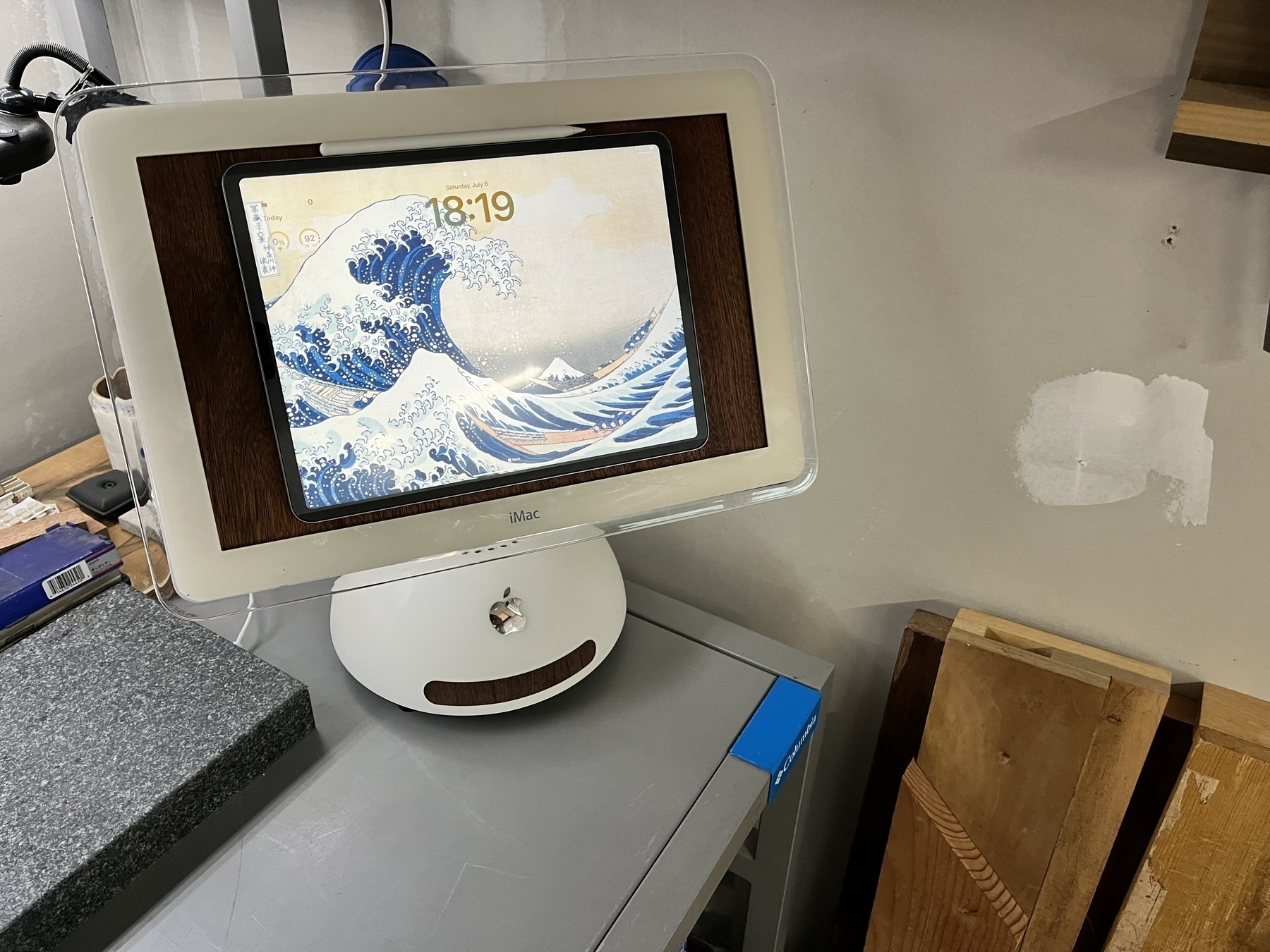
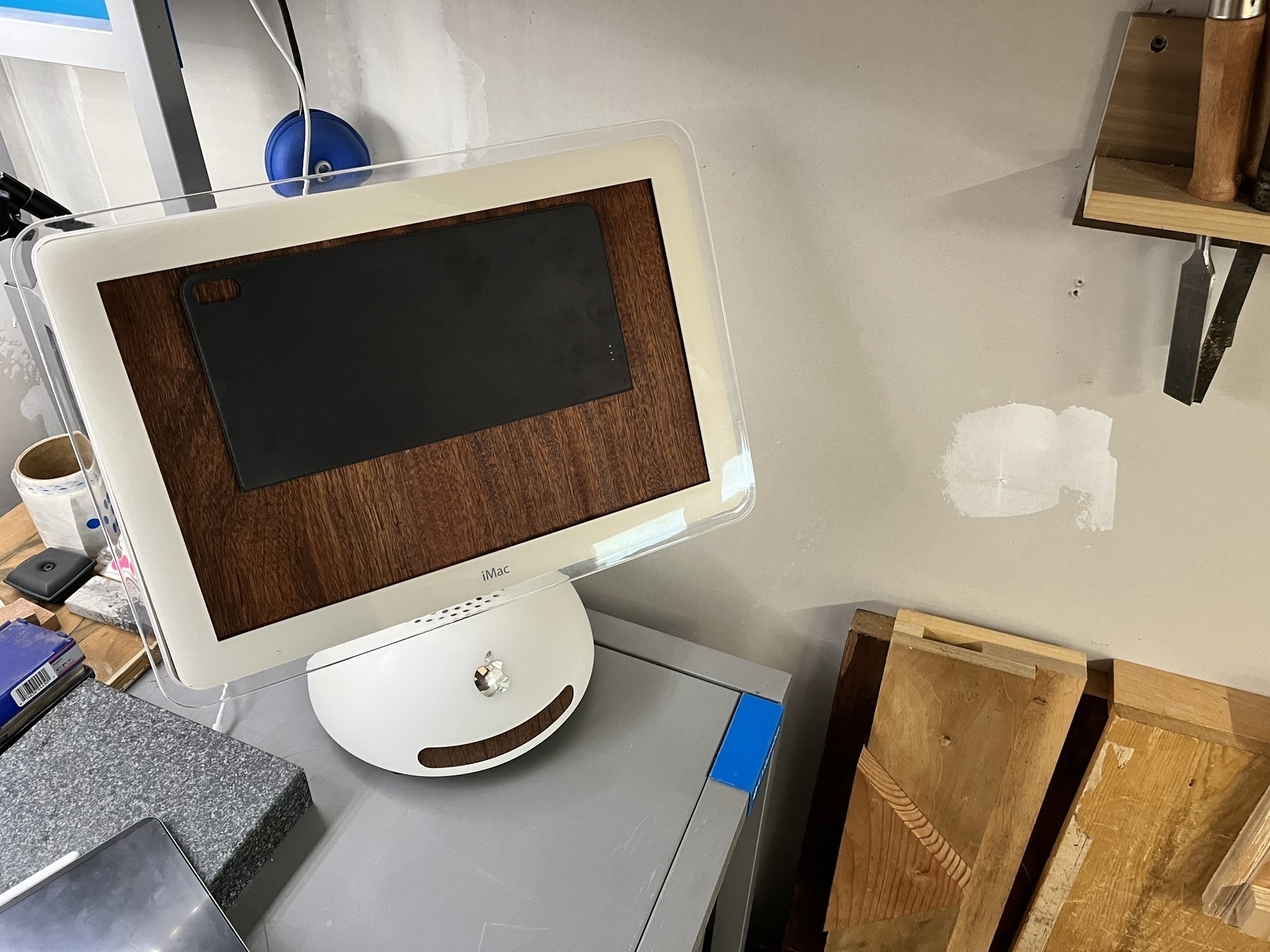
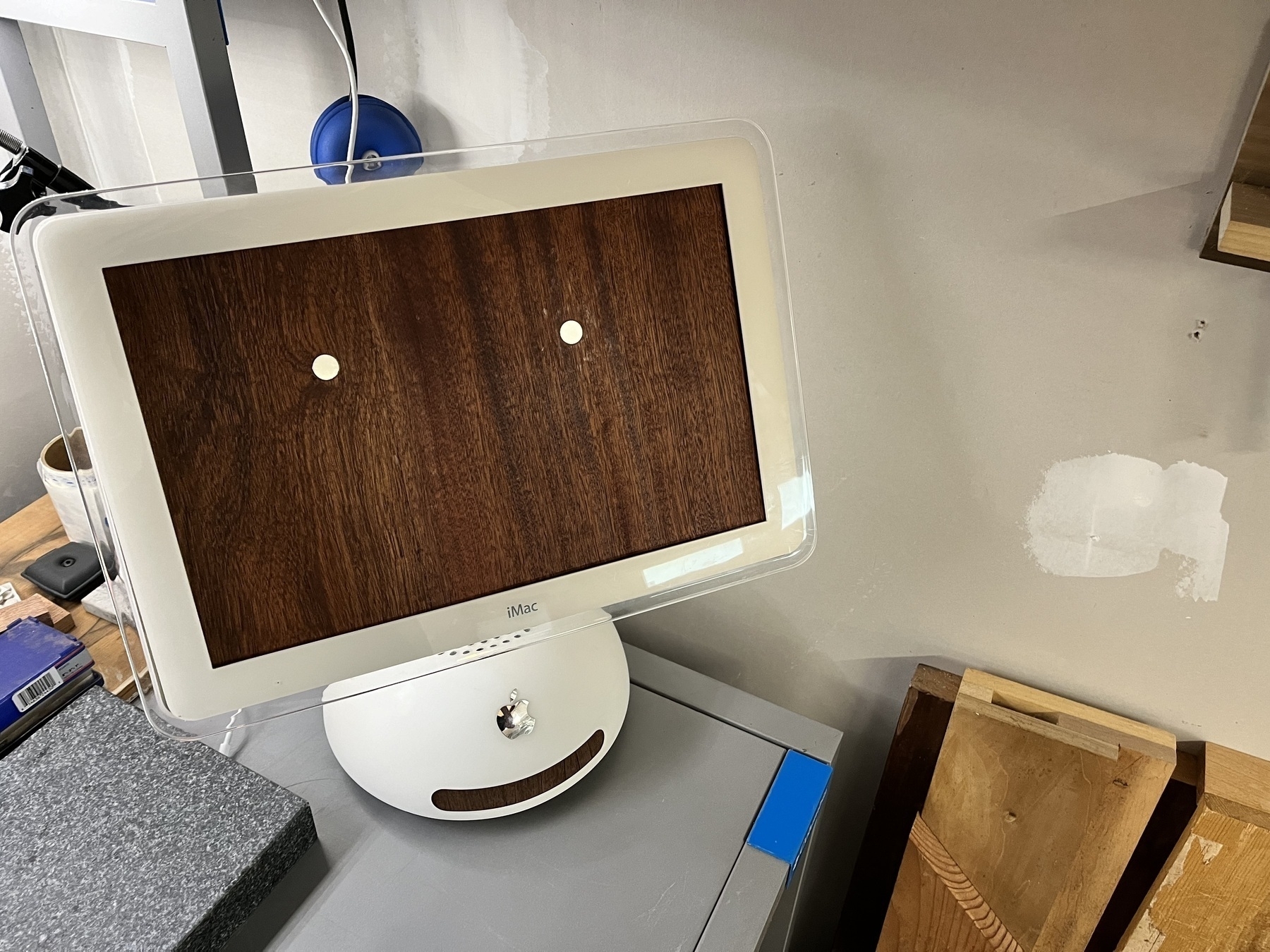
2002 iMac converted to iPad Pro Stand

2002 iMac converted to iPad Pro stand

I completed a side project to repurpose my old 2002 iMac into a stand to hold my iPad Pro for when I’m in my workshop. The base is completely gutted so I had to weight it so it balanced correctly. The iPad is held in place by another repurposed thing: an old iPad Smart Keyboard case that I cut down to size so it is only the magnetized part. Strong, small magnets are attached on the back of this case that connect up to magnets embedded in the sapele wood where the monitor used to be. So I can remove the iPad and the case.

The drive slot is wood veneer — I discovered there is just enough of a gap between the plastic body and the underlying metal frame to slide the veneer strips in to make for a nice presentation. I use my iPad in the shop for entertainment and planning projects, so I can grab it when I’m designing then hang it up here out of the way when I just want music or to watch the occasional video.

I’ve been lugging this old iMac around for decades just to someday do something interesting with it, because I love this design. So this is that. On a side note, I think the design of the iMac arm, and this design generally, is genius. Hope to see a modern version of a tilt and swivel arm used in some Apple product in the future.

2002 iMac converted to iPad Pro holder showing the magnetized, cut down Magic Keyboard backing attached by magnets 2002 iMac converted to iPad Pro holder, showing only the strong magnets that keep the iPad in place with the back of a cut-down Magic Keyboard backing

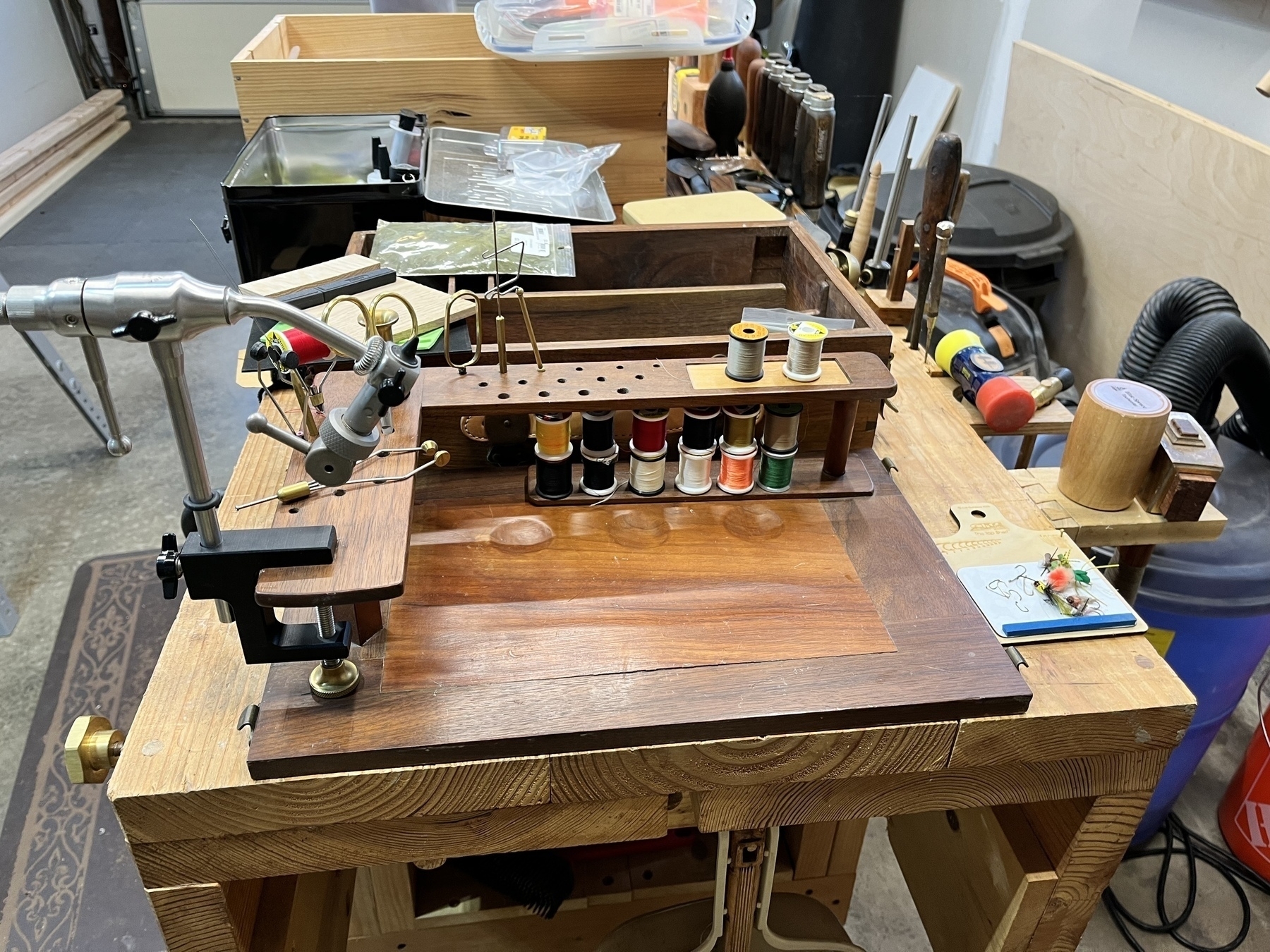
Woodworking bench converted to fly tying station this morning.

A fly tying station features various tools, spools of thread, and organized compartments on a wooden woodworking workbench.

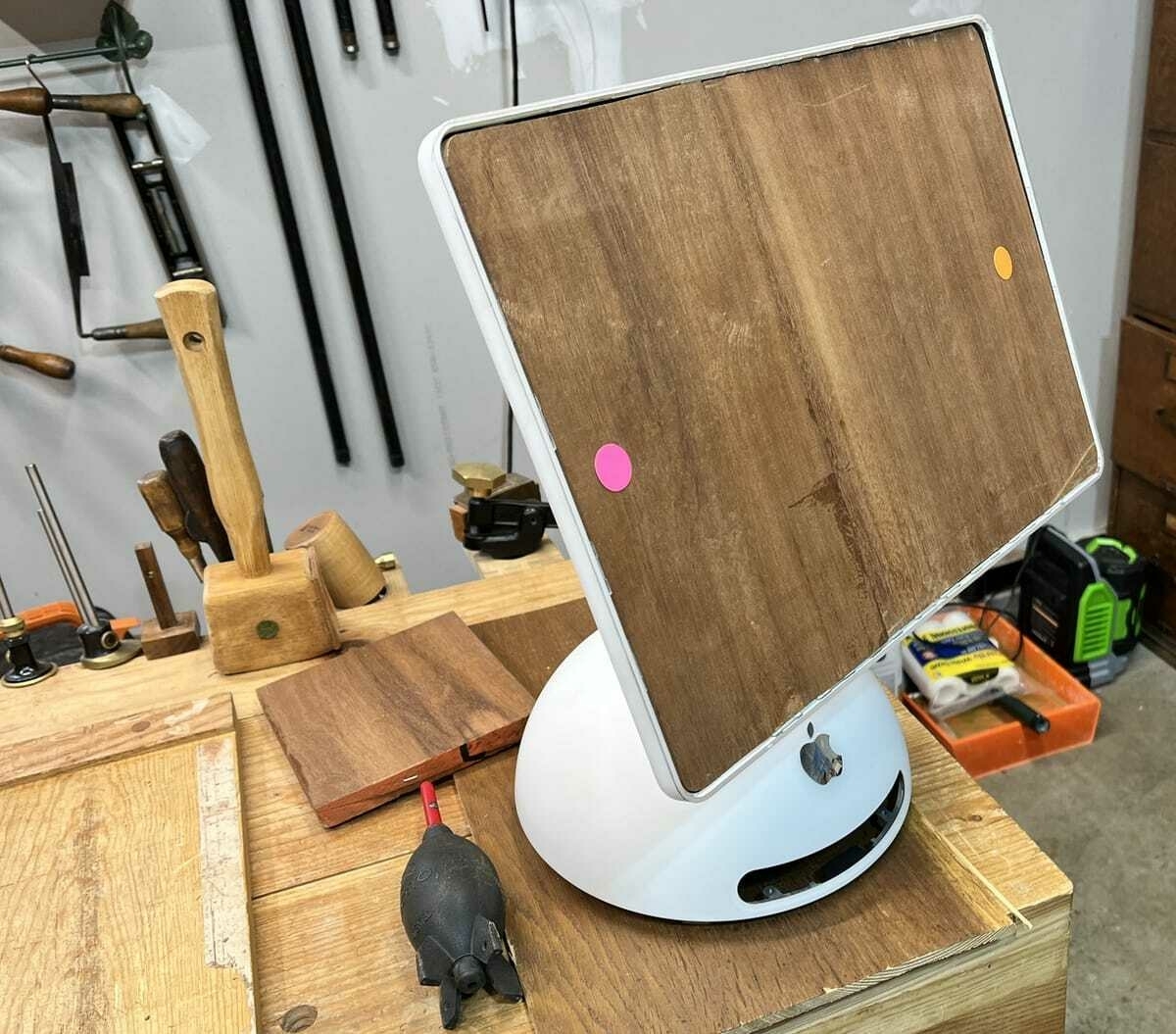
I’m working on a solution to convert my old iMac G4 into an iPad stand. Still in experimental phase.

a gutted imac G4 with wood in place of screen